Diffuse Reflectors
 Diffuse reflection occurs when the surface is characterized by objects that are large relative to the wavelength of
the incident radiation. As a result, radiation is reflected in many different directions, depending on the orientation of the
smaller reflecting surfaces. This diffuse reflection does not yield a mirror image, but instead produces diffused radiation.
If the surface is so rough that there are no individual reflecting surfaces, then unpredictable scattering may occur. A
Lambertian surface is one for which the radiant flux leaving the surface is constant for any angle of reflectance to
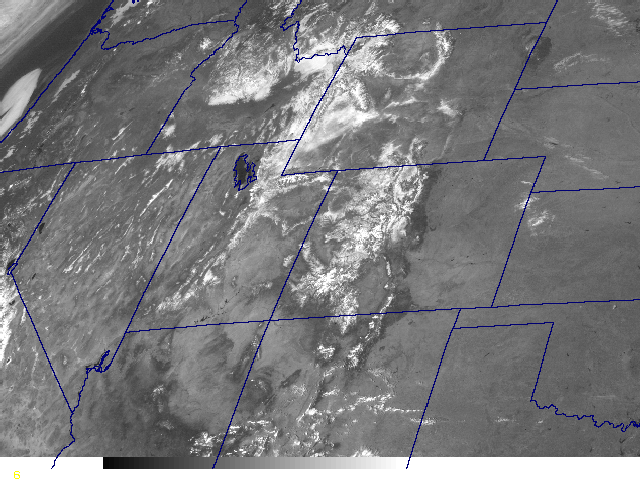
the surface. A good example of an ideal diffuse reflector is that of snow cover. Contrast the image below with the
sunglint image shown in the section on specular reflection.
Diffuse reflection occurs when the surface is characterized by objects that are large relative to the wavelength of
the incident radiation. As a result, radiation is reflected in many different directions, depending on the orientation of the
smaller reflecting surfaces. This diffuse reflection does not yield a mirror image, but instead produces diffused radiation.
If the surface is so rough that there are no individual reflecting surfaces, then unpredictable scattering may occur. A
Lambertian surface is one for which the radiant flux leaving the surface is constant for any angle of reflectance to
the surface. A good example of an ideal diffuse reflector is that of snow cover. Contrast the image below with the
sunglint image shown in the section on specular reflection.
Go back one step
Go to front page